No products in the cart.

Only this weekend
Super Discount
Items on sale this week
Top picks this week. Up to 50% off the best selling products.
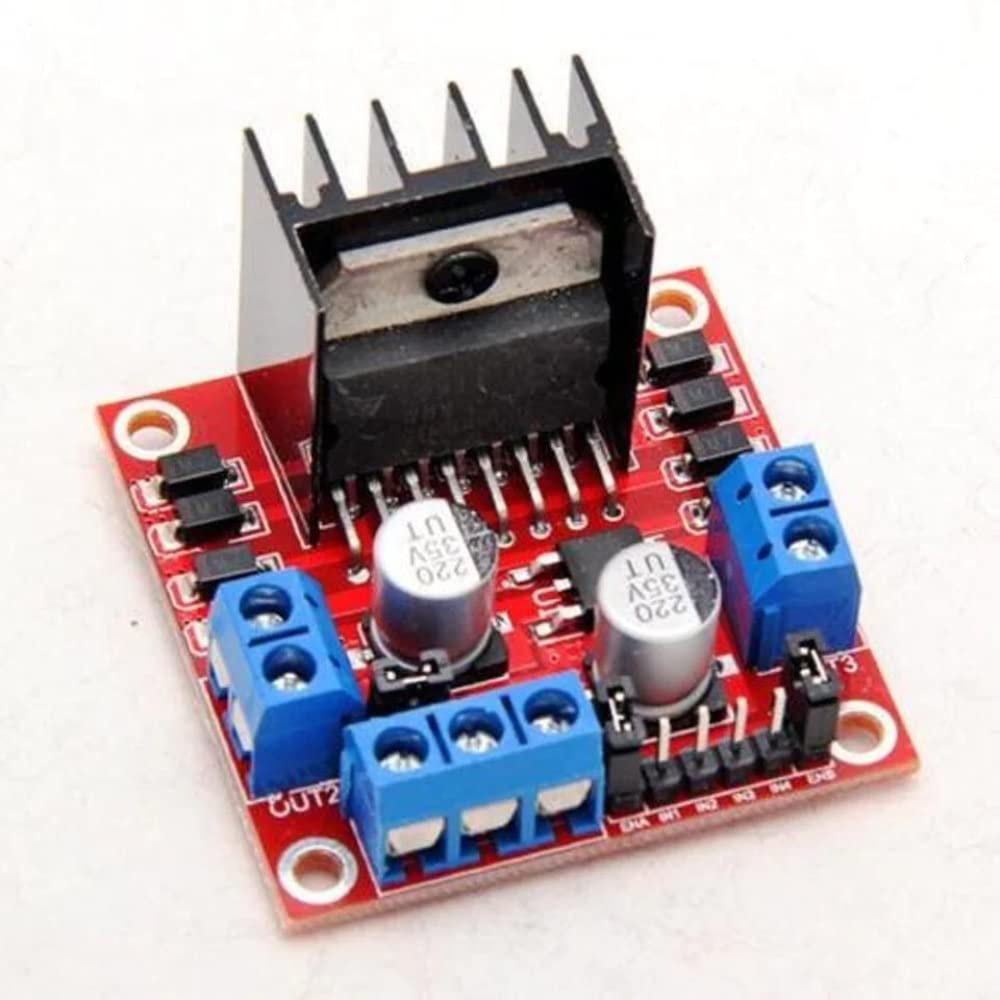


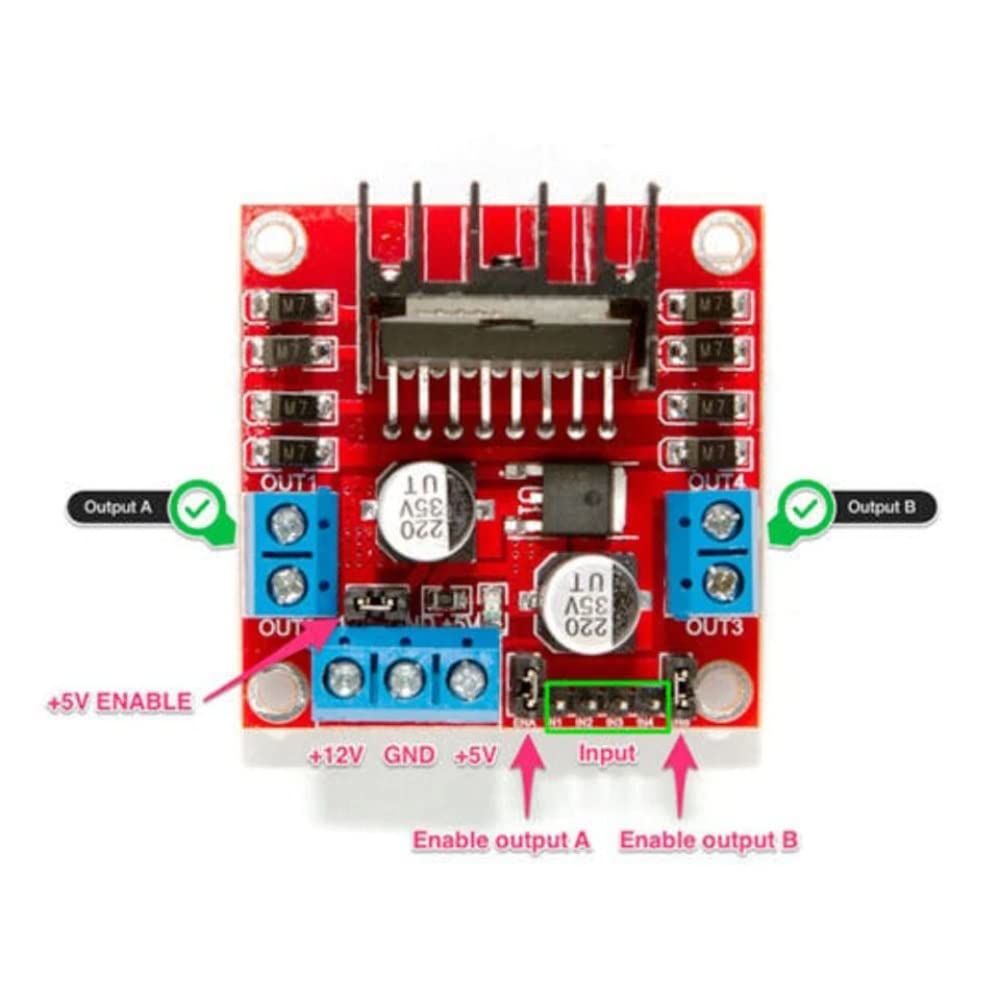

The L298 (most commonly deployed on the L298N module board) is a dual full-bridge motor driver designed to handle high voltage and high current inductive loads. It acts as a high-power synchronous interface between low-power microcontrollers (like Arduino, Raspberry Pi, or ESP32) and electric motors that demand far more operating current
Power Terminals:
12V / VS: Connects to your external motor power supply (typically 5V–35V).
GND: Common ground shared between your power source and your microcontroller.
5V / VSS: Serves as a 5V logic input if your power supply is over 12V (and the 5V regulator jumper is removed), or acts as a 5V power output to your microcontroller if your motor supply is under 12V.
Control Input Pins:
ENA & ENB: Enable pins for Motor A and Motor B. Removing the jumper cap and applying a PWM signal allows fine speed control.
IN1 & IN2: Digital direction control inputs for Motor A.
IN3 & IN4: Digital direction control inputs for Motor B.
Motor Output Pins:
OUT1 & OUT2: Output terminals wired straight to the leads of Motor A.
OUT3 & OUT4: Output terminals wired straight to the leads of Motor B.
| Specification | Typical Rating |
| Driver Chip | STMicroelectronics L298N Dual H-Bridge |
| Motor Supply Voltage (Max) | 5V to 35V (Chip rated up to 46V) |
| Output Current (Per Channel) | Up to 2A continuous (3A peak briefly) |
| Logic Supply Voltage | 5V |
| Logic Current Consumption | 0mA – 36mA |
| Maximum Power Dissipation | 25W |
| Efficiency Mechanism | Bipolar (BJT) transistor-based design |
Reviews
There are no reviews yet.