No products in the cart.

Only this weekend
Super Discount
Items on sale this week
Top picks this week. Up to 50% off the best selling products.
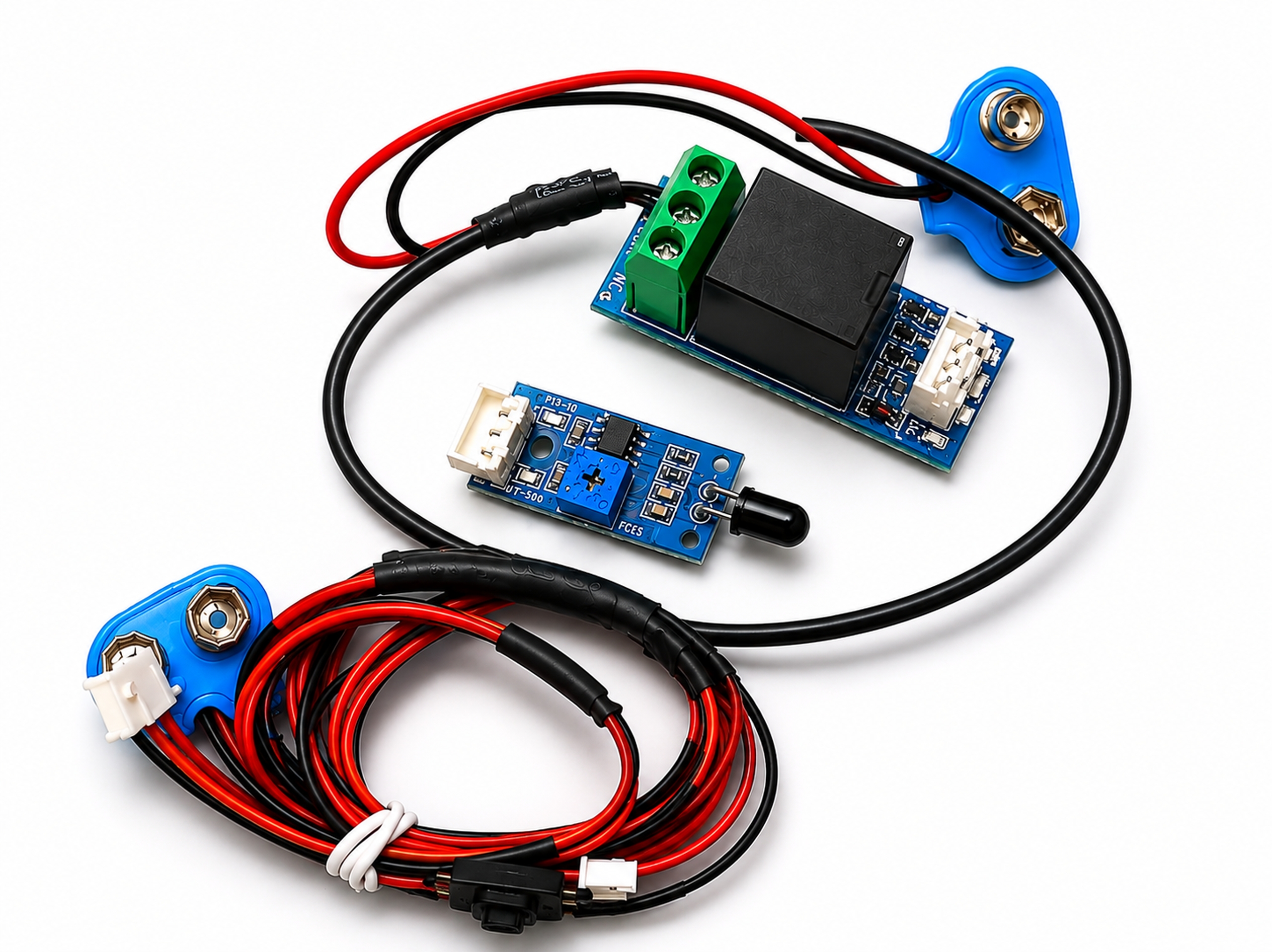
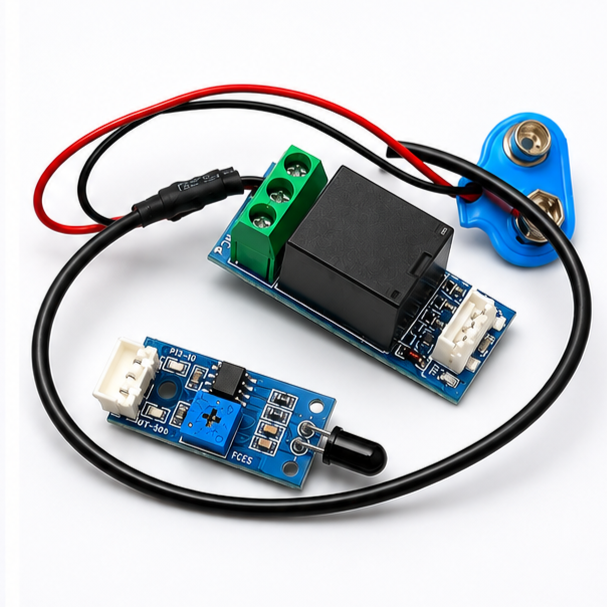
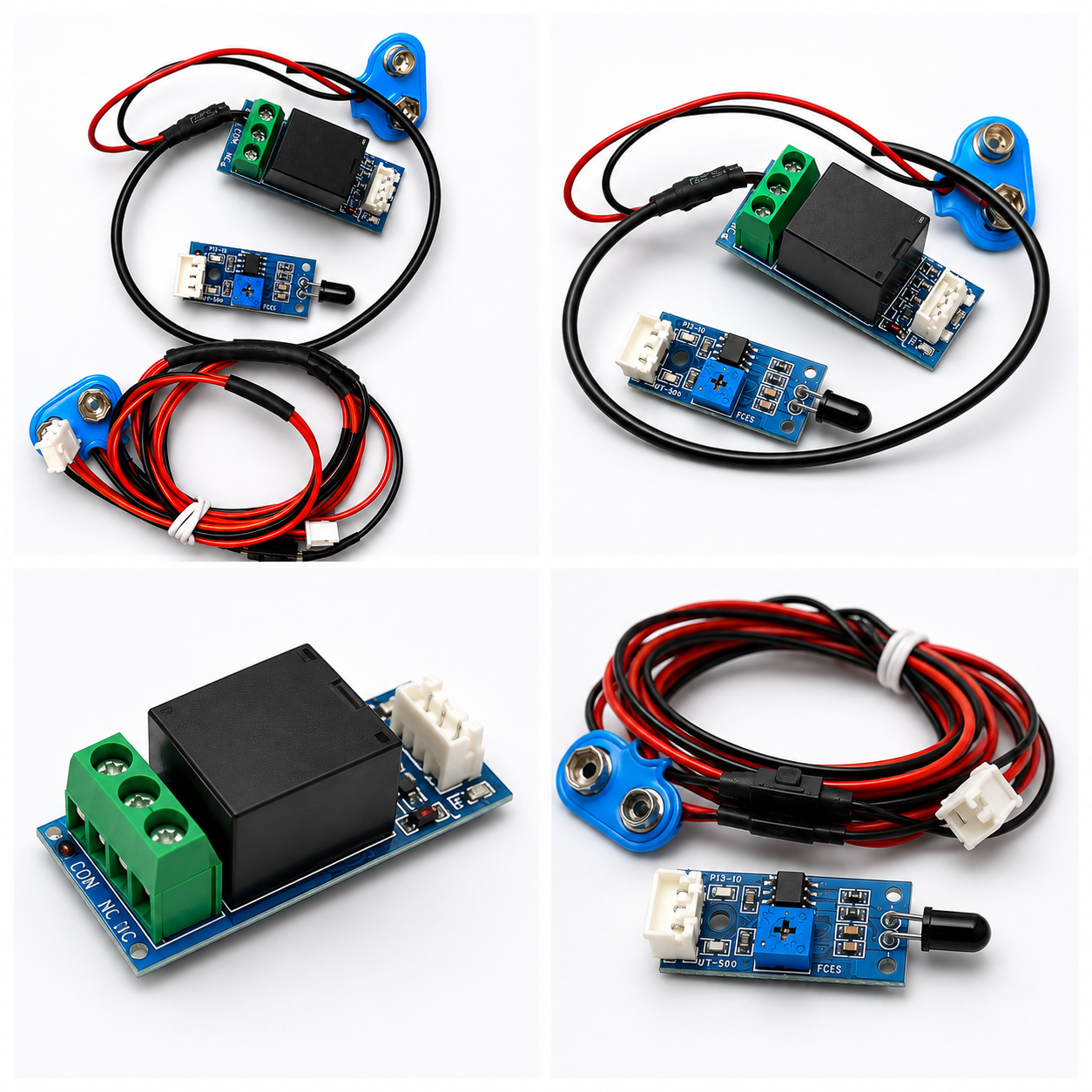
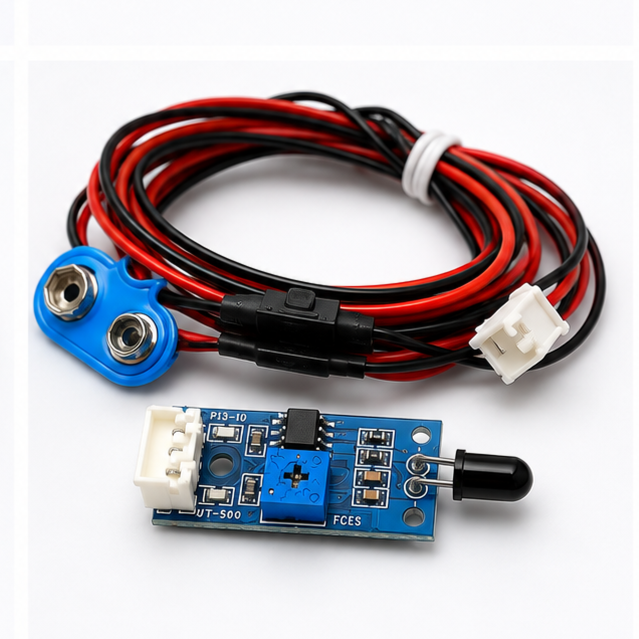


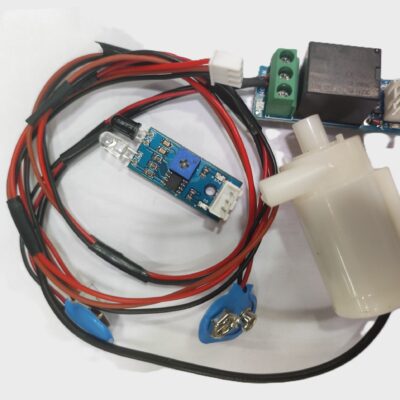
The circuit shown can be used as a small automatic fire-extinguishing prototype. For an actual fire-extinguisher system, a proper flame sensor should be used rather than a simple obstacle/proximity sensor.
The automatic fire extinguisher works on the principle of flame detection using infrared radiation.
A flame produces infrared radiation. The flame sensor detects the IR radiation from the flame and produces an electrical output signal. This signal activates the relay, which acts as an automatic switch.
The relay then supplies power to the DC water pump. The pump draws water from the tank and sends it through the pipe to the spray nozzle, thereby extinguishing the fire.
Flame → Flame Sensor → Relay → Water Pump → Nozzle → Water Spray
The sensor in your uploaded diagram appears to be an IR obstacle/proximity sensor, which detects reflected objects. For an automatic fire extinguisher, replace it with a flame sensor module designed to detect flame/IR radiation.
Also, a small 9 V rectangular battery may not provide enough current for many DC pumps. Check the pump’s rated voltage and current before connecting it. For a school-project prototype, a low-voltage DC pump and a suitable power supply are preferable.
Safety: This is suitable as an educational prototype. Do not rely on it as the sole protection against a real fire; use certified fire-safety equipment for actual fire protection.

Reviews
There are no reviews yet.